
Samara Karoo Reserve in the Great Karoo is a Big Five destination without the traffic jams, tour buses or crowded sightings. Near the historic Eastern Cape town of Graaff-Reinet, it is a place of profound stillness: vast horizons, enormous skies and a sense of space that is rare.
Samara’s story began in 1997, when Mark and Sarah Tompkins started buying farms in the area with the aim of rewilding the land. Fences were removed, old structures dismantled and 11 farms – covering more than 27 000 hectares – slowly stitched back together. The work began from the ground up: restoring soil health and re-establishing indigenous vegetation so that animals could once again thrive.
Reintroducing megaherbivores was crucial. Elephants, explains reserve manager Ryno Erasmus, are “ecosystem engineers” – destructive by nature, yet essential. By pushing over trees and opening up dense thickets, they prevent the land from tipping into bushveld. Without them, the Karoo would slowly transform.
On a game drive, we meet Kahle, one of the resident elephants. “If he shows you he’s not really interested, you pass him,” Erasmus explains. “But if he’s standing in the road and saying ‘I’m in the mood today to show you I’m the boss’, then you treat him like the boss. It’s all about the mood and the signals he gives off as to how you’re going to treat him”.
“You can stand in the road and go past (the most likely outcome) but he might go to the vehicle and smell something that reminds him of an orange -someone’s perfume or something – and just by looking for that, he could injure someone.”
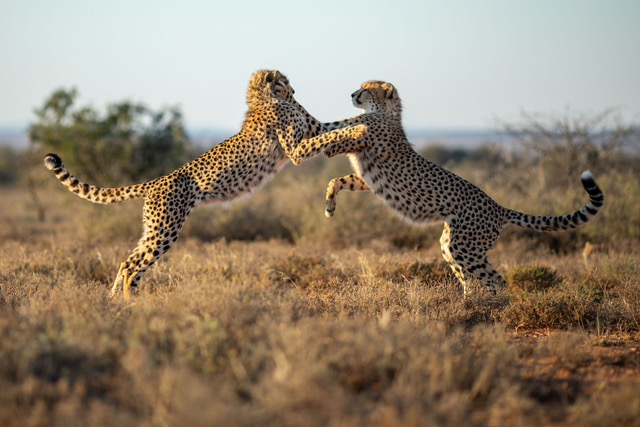
Rewilding here also meant the return of predators. In 2004, cheetahs were reintroduced to the area for the first time in 130 years – one of Samara’s greatest conservation successes. It began with Sibella, rescued from a rehabilitation centre after being attacked by hunters and dogs. At Samara she went on to give birth to 20 cubs, and today her bloodline is legendary on the reserve.
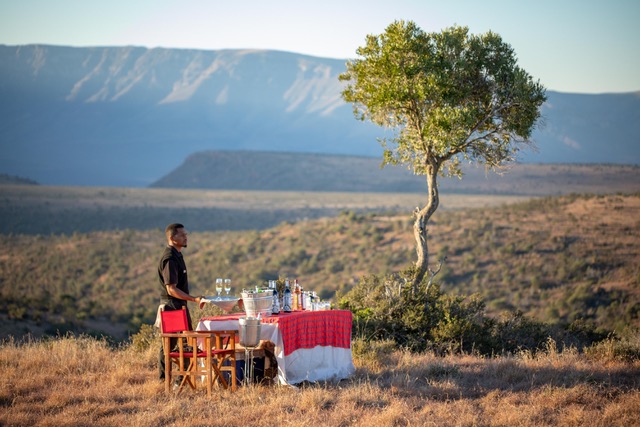
Many of the cheetahs are now habituated to vehicles and humans, allowing for close – though carefully managed – encounters. Some wear radio collars to help trackers monitor them across the rugged terrain. One evening, tracker Klippers climbs onto the tracking seat at the front of our vehicle and heads out in search of Naledi and her cubs. As dusk falls and we prepare to turn back, he disappears on foot with his device – and finds them. Later that night, as we sip drinks at the off-grid Plains Camp, two adult cheetahs materialise silently on the deck to drink from the plunge pool.
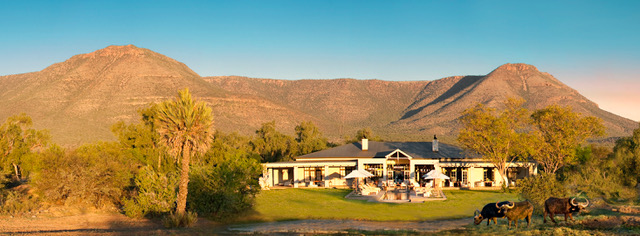
At the flagship Karoo Lodge, warthogs wander past the verandas, monkeys dart through the trees and giraffes browse near the fence line. Plans are under way to expand the reserve by a further 4000 hectares, reopening ancient migratory routes and returning even more land to nature – a vision that depends on voluntary conservation agreements with neighbouring landowners.
Samara funds conservation through luxury safari tourism and is a member of The Long Run, a global network committed to the four Cs: conservation, community, culture and commerce.
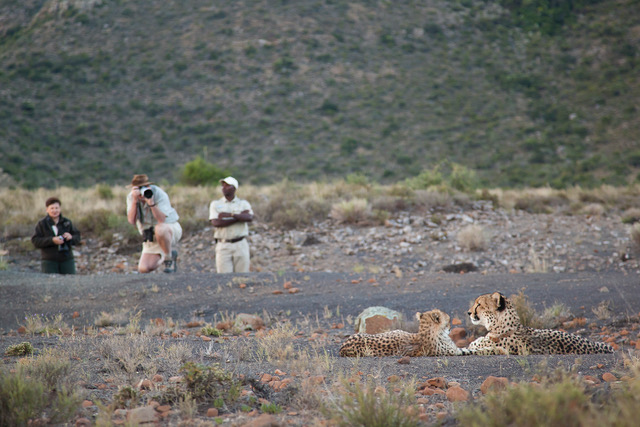
It recently launched a new offering with the Cheetah Trail, a three-night four-day small group walking safari with an opportunity to witness these animals in their natural habitat against the stunning Great Karoo wilderness. The Cheetah trail covers just less than 30km over two days and is a curated wilderness experience.
The route follows footpaths and game trails through remote, untouched areas of the reserve that are inaccessible by vehicle. The intention is that guests will learn to read the land – spotting tracks, identifying flora and fauna, and discovering ancient rock formations.
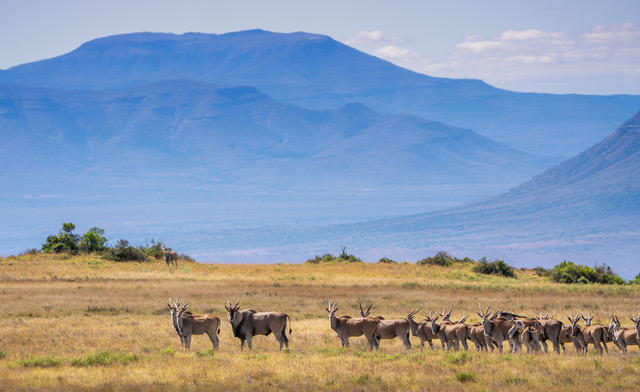
Ecologically, Samara is exceptional. It lies at the junction of five of South Africa’s nine vegetation biomes – compared with just one at Kruger National Park – yet it offers none of the congestion associated with the better-known Big Five parks. Here, there are no convoys at sightings, no queues at waterholes and no tour buses rumbling past.
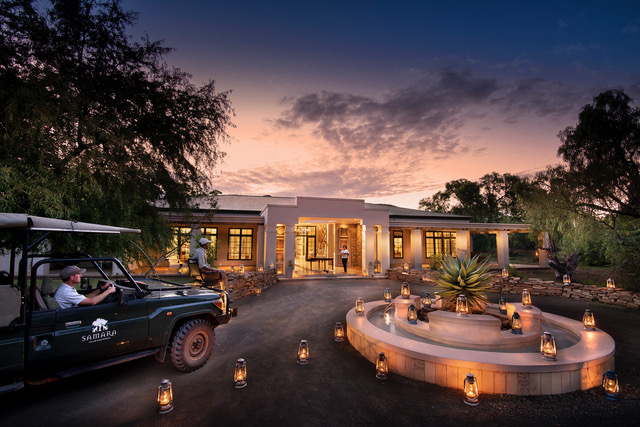
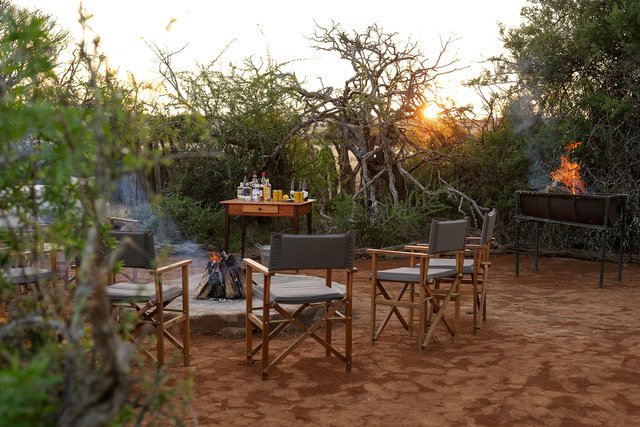
To stay? Plains Camp consists of four free-standing tents set on wooden decks, each separate from the dining and lounge area. It’s rustic but elegant.
Then there’s the more contemporary Manor House, and Karoo Lodge. Karoo Lodge has shady stoeps, wooden window shutters and broekie lace. It’s a recently renovated farmhouse encircled by a natural amphitheatre of mountain, with 10 private suites all set a short distance away.
The spacious standalone suites feel like stylish cocoon, with an elegant simplicity. There’s a metal four-poster bed adorned with cushions hand-embroidered with indigenous plants. Just outside, stones have been fashioned into outdoor showers.
Our stay is peppered with delicious meals, including Karoo lamb and some standout salads – the spekboom salad especially. We also try spekboom cake, which is like a slightly spiced fruit cake. Dinner on our final night is in the bush – a braai with pap and mielies, and pumpkin fritters in the mix.
Behind the scenes, annual game counts in conjunction with vegetation monitoring determine whether the veld is appropriately stocked and whether sufficient prey exists for predators. Conservation here is precise and data-driven.
Turns out South Africa has a surplus of free- roaming and semi-managed lions and elephants, which means the animals themselves have no market value. If a reserve such as Samara needs to introduce them, they can be sourced at no cost – but relocating them is expensive. An elephant relocation can cost about R400 000 due to the specialised equipment and expertise required.
Samara Karoo Reserve has been passed on to Sarah’s daughter Isabelle to take over guardianship of the reserve. It’s a reserve where conservation is a deliberate rebuilding of an ancient ecosystem – one elephant path, one cheetah cub and one restored hectare at a time. END