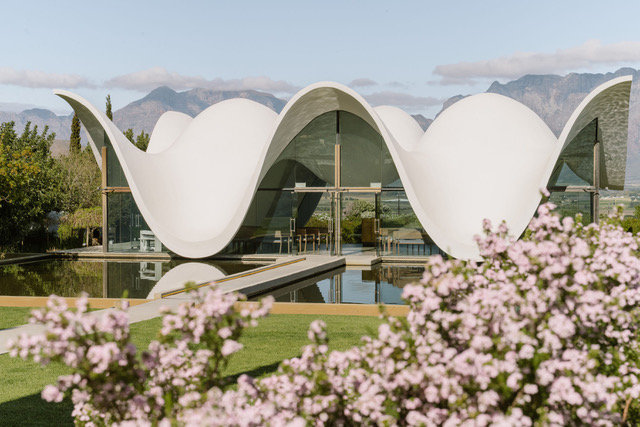
Think of Bosjes, and the image that most readily comes to mind is its striking chapel, a sculptural landmark that anchors almost every photograph of the estate.
The chapel is unapologetically contemporary; a series of fluid, wave-like curves that appear to float on the water encircling it. Light pours through its glass walls, illuminating simple, pew-like seating for around 120 people. Designed by award-winning architect Coetzee Steyn of Steyn Studio, it manages the rare feat of feeling both monumental and weightless. Unsurprisingly, it has become a sought-after wedding venue.
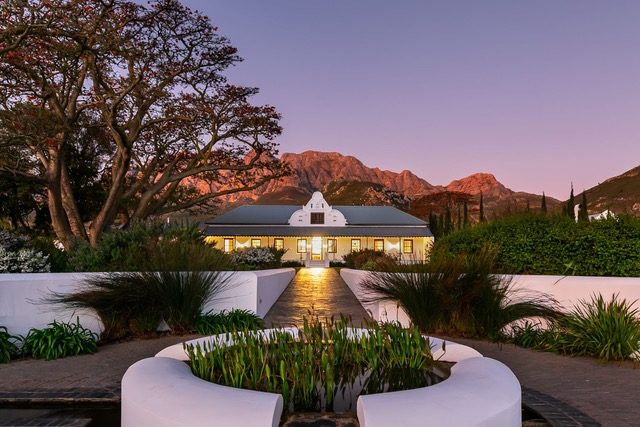
Beyond this architectural showpiece, the estate unfolds more quietly. The remaining buildings are restrained, measured and meditative, designed to sit gently within the landscape rather than compete with it. Whitewashed walls, stone, timber and glass create a sense of calm cohesion. Some structures are partially concealed and there’s a thoughtful interplay between the historic and the contemporary.
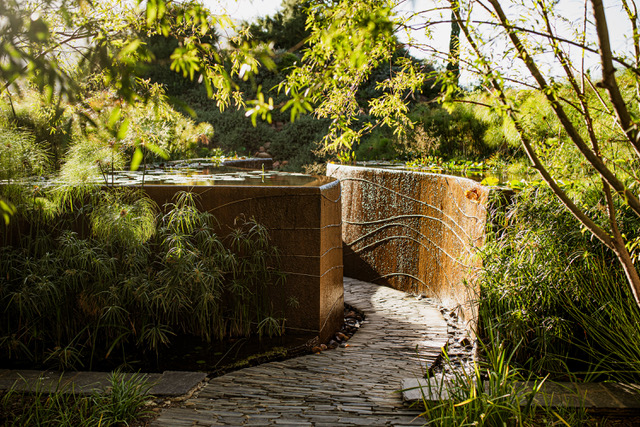
Bosjes is a working farm, producing olives, peaches, proteas and grapes, and making its own wine. The views across the Breedekloof Valley are expansive and arresting, yet the experience of the estate is deliberately intimate. Indigenous gardens, water features, winding pathways and small pavilions are arranged like a series of carefully composed moments, encouraging slow movement and quiet reflection.
The name Bosjes, derived from Dutch and Afrikaans for “little bushes”, pays tribute to the region’s endangered fynbos and renosterveld. This connection to natural heritage is reinforced throughout the estate in blue-and-white tiled murals depicting local flora and fauna, including a prominent Delft-inspired “tree of life” motif.
Visitors can explore Bosjes as day guests or stay overnight at the Herehuis, the original Cape Dutch homestead dating back to the 1790. From here, views stretch across mountains, valley and gardens.
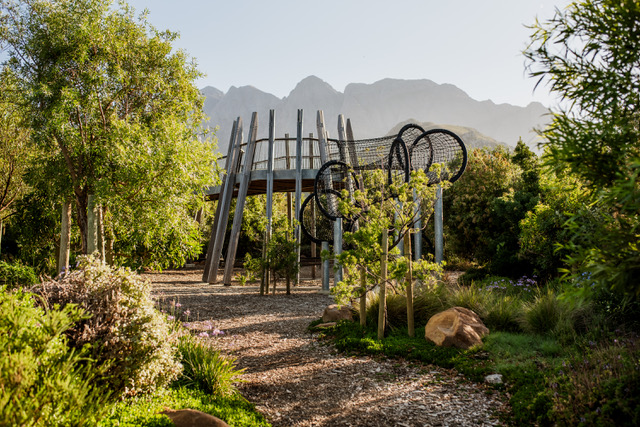
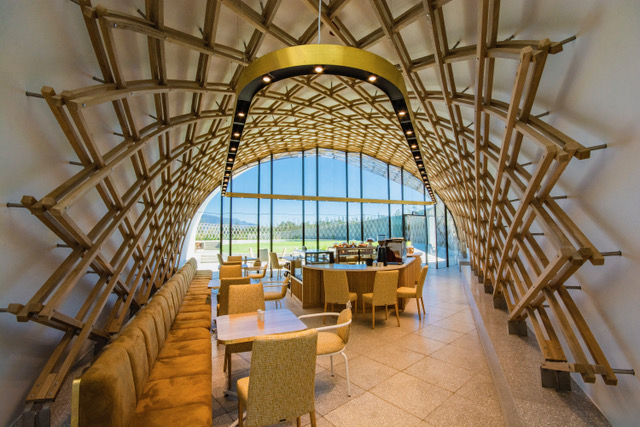
Food and language at Bosjes celebrate Afrikaans heritage. At Bosjes Kombuis, hearty, comforting dishes – think slow-cooked lamb shank – anchor the menu, while children roam freely between rolling lawns and three thoughtfully designed play areas. Crafted from wood, sand and steel, these spaces include a zip line, the Boombrug canopy walk and a vertical labyrinth, ensuring that nature and play are seamlessly intertwined.
It’s as if it’s a series of carefully composed moments with indigenous gardens, water features, pathways and pavilions that encourage slow movement and pause to reflect. Buildings are understated and the materials and colours echo the valley: white, stone, timber and glass. There’s a sense of quiet restraint.
A scenic one-and-a-half hour drive from Cape Town in the Breedekloof Valley, Bosjes is in the heart of the Western cape winelands there is also the rustic allure and aesthetic contrasts..
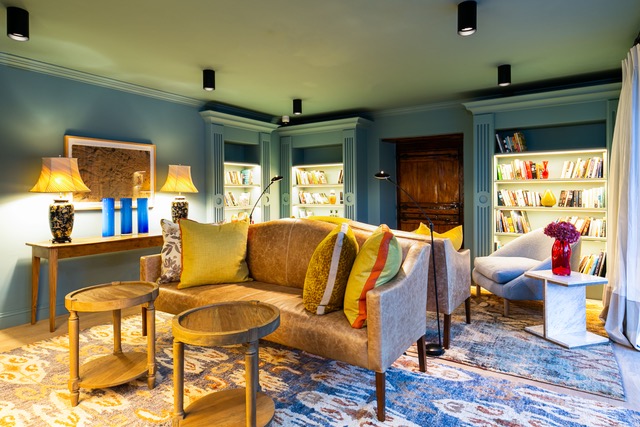
This eight-room guest house features a design that is both bold and restrained. The family suite (where we stayed) has a barn-like yet luxurious sense of space and style. Each room has access to the pool, while near the main entrance there is a communal library with plump, comfortable chairs and sofas.
Food and language celebrate the Afrikaans heritage of the rea. Perhaps a hearty lamb shank – at Bosjes Kombuis, while children get to pay at one of the three play areas. The rolling lawns outside allow them to breeze in and out, keeping them occupied in a contained yet open space.
Each of the three children’s areas is crafted from wood, sand and steel, and one includes a zip line for the kids. The Boombrug canopy walk, a vertical labyrinth, and nature intertwined throughout, the spaces entertain all ages.
A short walk from the main leads to Die Spens (The Pantry) partially tucked beneath a planted roof. With its deli-style offering of light meals, fresh bread and pastries, and shelves lined with pickles, chillies and jams, it feels both practical and charming. Nearby, Die Winkel (The Shop) is arranged like a small amphitheatre, selling locally designed products (tea towels, napkins and tablecloths in the mix) alongside Bosjes-branded items such as candles, lip balm and body wash.
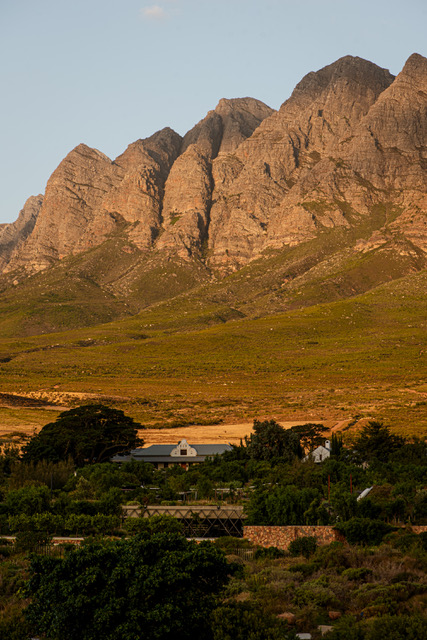
Set around an hour-and-a-half’s scenic drive from Cape Town, Bosjes lies at the heart of the Western Cape winelands with plenty to explore beyond the estate. Hiking trails, craft breweries, freshwater fishing at Brandvlei Dam, wine routes and seasonal fruit picking are all close by, while Aden’s Farm Flowers and botanical gardens are about 25km away.
Bosjes not just a place to see, but a place to move through slowly – an estate defined as much by pause and restraint as its most iconic architectural feature.