
Lonely Planet, one of the world’s most recognized travel-guide publishers, has named Kruger Shalati among its Top 25 bucket-list experiences worldwide for 2026 in its global guide for the year ahead.
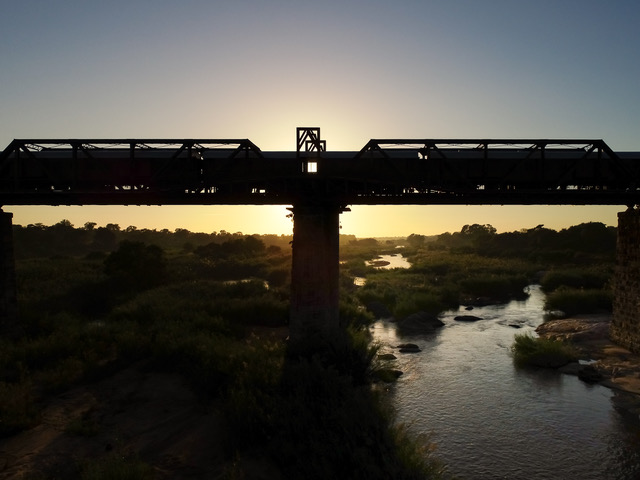
Suspended above the Sabie River on a decommissioned centuries-old railway bridge, Kruger Shalati occupies one of the most extraordinary settings in the Kruger National Park. Or anywhere, really. The lodge pays homage to the park’s early visitors, who slept in the trained carriages parked overnight on the bridge in the 1920s.
Opened in 2020, the property has quickly become a standout destination and earned international acclaim. It recently received two Michelin Keysand was voted South Africa’s Leading Safari Lodge at the 2025 World Travel Awards. Time magazine previously named it one of the world’s 100 extraordinary destinations, while Travel + Leisure declared it “possibly the coolest hotel in the world”.
The lodge is a refurbished train-carriage concept with 24 Carriage Suites (in the train cars on the bridge) and seven Bridge House suites (next to the bridge) – these offer elevated views over the river and bush.
For years, visitors to the Kruger National Park had few options other than basic accommodation or ultra-premium lodges like Mala Mala, but things have changed and Kruger Shalati sits at the forefront of this, carving out a niche with its historic setting, design-driven aesthetic and atmospheric experience.
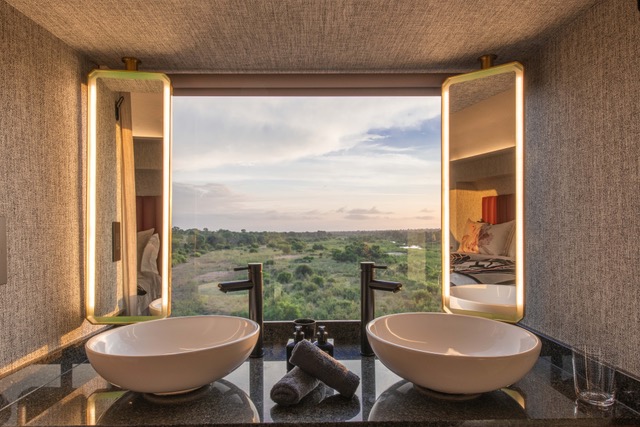
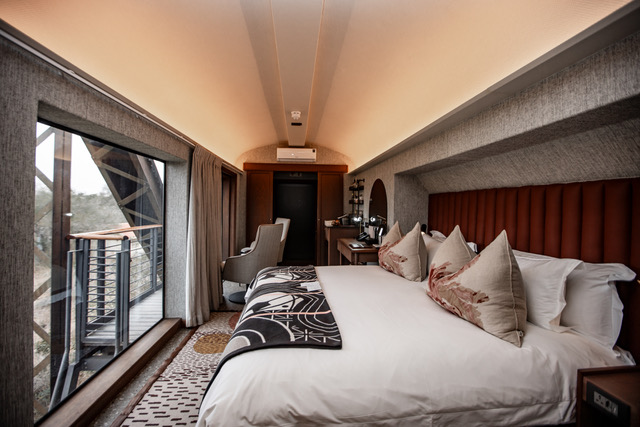
Kruger Shalati comprises 31 suites – 24 Carriage Suites within the refurbished train and seven Bridge House suites on land – each offering elevated, floor-to-ceiling views over the river and surrounding bush. The design evokes an elegant, bygone era with subtle Art Deco touches, layered textiles, and a restrained use of African references. Interiors by Hesse Kleinloog Studio and local designers incorporate Basotho-inspired blankets, marble finishes, and dramatic black-and-white bathroom tiling.
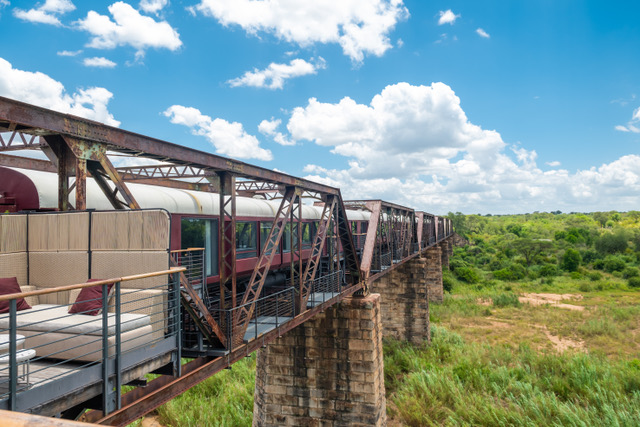
Bringing the concept to life was challenging. The team sourced 1950s railway carriages from the Free State, which were stripped down and rebuilt as luxurious cabins, now positioned directly above the river with uninterrupted wildlife views.
Named after an African warrior queen, it goes back to a time when the train would park overnight so guests could retire for the night to their carriage. A nine-day tour was introduced through the Sabie Game Reserve in 1923 – the first motoring tourists were admitted to Kruger only in 1927 and the track was last used in the early 1970s.
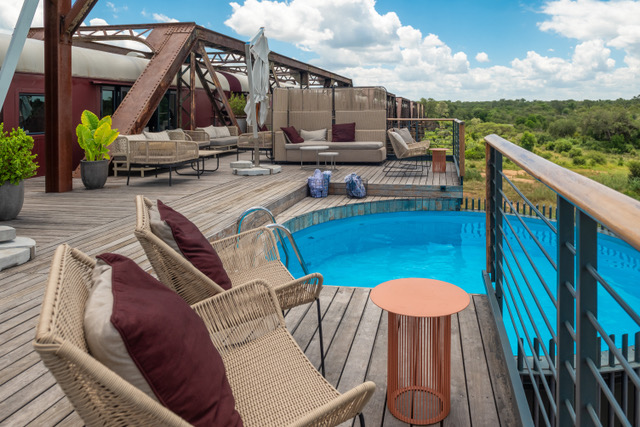
A stay here blends immersion with indulgence. Guests can watch elephants, hippos and crocodiles from their beds, decks, or the overhanging pool. Even without the 4.15am wake-up call for game drives, you’ll hear monkeys scampering over the roof or hippos grunting below. Early-morning swims in the reimagined water-tank pool come with unforgettable vistas of buffalo and crocodiles in the river.
One Canadian couple, who joined us on a game drive, said they chose Kruger Shalati over other lodges as they figured they’d never again get the experience of a train-hotel in one of the world’s best game parks.
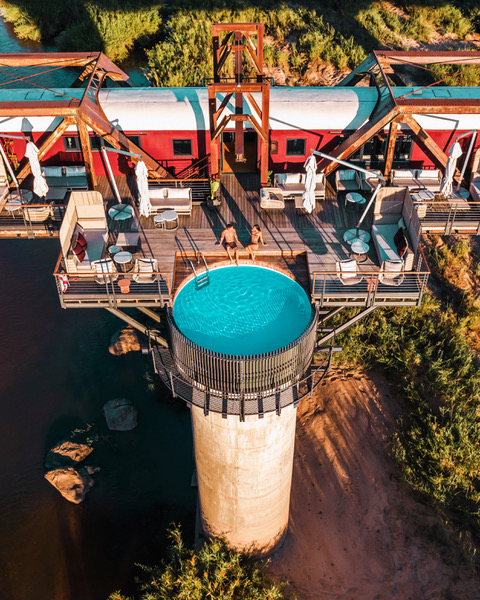
Food is refined by unfussy, and many staff members come from communities, displaced decades ago during the park’s development – making the lodge a meaningful employer for first-time hospitality workers. The outdoor deck, ideal for cappuccinos, cocktails, or afternoon tea, is one of the property’s great pleasures.
Situated pretty much in the Skukuza rest camp, the lodge offers easy access to its amenities, including a gift shop and a conservation-focused cinema. Skukuza Airport lies less than five kilometres away.
Lonely Planet’s other Top 25 picks for 2026 include rafting through the Grand Canyon, cycling across
the Batanes Islands in the Philippines, and sleeping beside an active volcano in Hawaii.